What is the NIST Standard?

The NIST Standard is a framework design for risk tolerance to business and other institutions.    Understanding the NIST framework an organization can make informed decisions as to what is the necessary steps to protect a business IT with cybersecurity solutions.   Understanding the risk of infrastructure is important to choosing the proper solutions to protect the business organization.   The implementation of risk management offers organizations the ability to quantify and choose which solutions and services are best to provide a proactive security program.

Each business organization can choose different ways in which risk is managed.    The management of risk may come in the form of avoidance, mitigation, transfer or accepting the risk depending on the potential impact to the delivery of critical services.    It is the NIST Framework processes that help to enable organizations to inform and prioritize decisions regarding cybersecurity.   By using the NIST Framework a business organization can choose where best to put proactive resources to ensure desired outcomes.

San Diego Computer Consulting is certified in NIST Training and implementation.   We can help a business organization build out the NIST Assessment Framework and help to identify what is the best cybersecurity practice for each function of the business depending on the risk assessment that is made for that function.
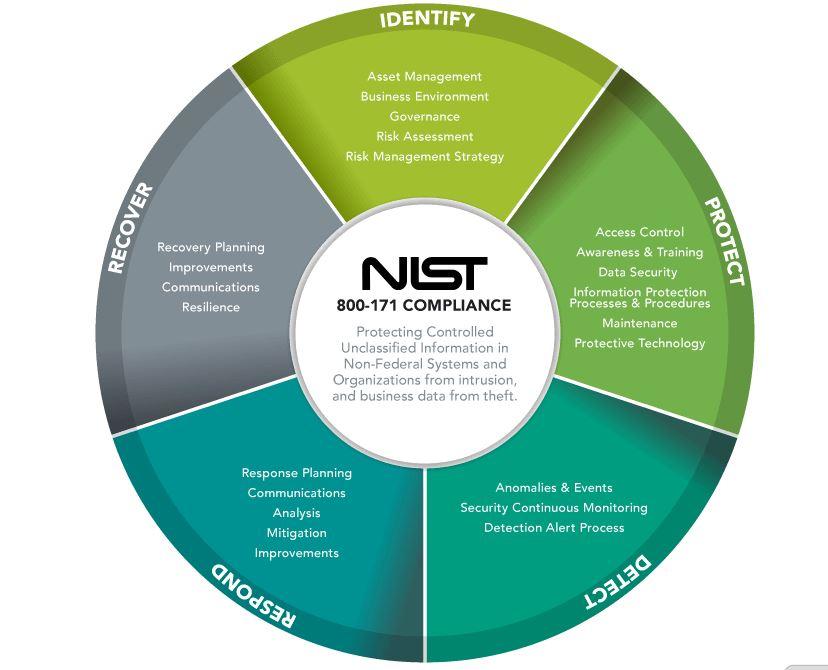
Nist Framwork 2

The NIST Framework Core: Cyber Assessment.

The Framework Core is an assessment of presenting cybersecurity outcomes identified when managing cybersecurity risk.   The Framework consists of five functions that help build an identifiable set of the management of cybersecurity risk.   This is done by organizing information, enabling risk management decisions, addressing threats, and improving by learning from previous activities.  The goal of the Framework core is to show the balance of investing in IT protective services like security for email, computers, and networks will result in reduced impact to the delivery of services provided by the business organization.

The Framework Core is made up of 5 distinct Functions:

  1. Identify: The business organization understanding the management of cybersecurity risk to systems, assets, data, and capabilities.
  2. Protect: Develop and implement the appropriate safeguards to ensure delivery of critical infrastructure services.
  3. Detect: Develop and Implement the appropriate activities to identify the occurrence of a cybersecurity event.
  4. Respond: Develop and Implement the appropriate actives to identify the occurrence of a cybersecurity event.
  5. Recover: Develop and implement the appropriate activities to maintain plans to restore any capabilities or services that were impaired due to a cybersecurity event.

Identify Function. Finding the Vulnerabilities.

Identify Function.  The Most Important Category!

The identify function is one of the most important functions because the implementation and success of the NIST Framework is based on the idea that once all vulnerable systems are identified, then building out the NIST Framework functions are simple to evaluate.   It is the evaluation of each of the Identifiable functions for risk assessment that makes the NIST Framework functional and applicable.    Building out the identifiable functions allows the business organization to choose what is the best path for each of the cyber systems that are vulnerable.   By identifying the systems that are vulnerable, it then becomes easy to decides the best risk management solution for that system.


San Diego Computer Consulting will help you build out the Framework.

San Diego Computer Consulting can build out the NIST framework with a set of tools that helps us work with a client to identify each of the critical functions of the business and what IT solutions are used to complete that function.   Identifying the function through sifting through each process is key to filling out the NIST Framework.   We will also work to help identify the risk involved if such function was not operational.

Macro,Photo,Of,Tooth,Wheel,Mechanism,With,Risk,Management,Concept

Risk Assessment & Mitigation.

It is the risk assessment that helps the business organization to identify what processes and services should be implemented to the identifiable functions of the business. Through risk assessment, the business organization will be able to clearly define what tolerance they may have to an outage. It is that very tolerance that is critical to assess. Assessment of that risk identifies how important a function task is and what needs to be done to secure that function.

Risk Management Process.
San Diego Computer Consulting is a great resource for helping to provide the best security and backup solutions for your NIST identifiable functions. We can provide you a variety of security tools and solutions that can work with your IT functions. We can guide you on the best cyber-solution securities that are standardized in our industry. We recommend very specific tools that help to ensure the proactive protection of computer functions from nefarious activities.

Establishing & Improving a Cybersecurity Implementation Plan

The business organization needs to identify its business/mission objectives and organizational priorities.   The use of this information promotes for decision that are strategic for the implementation of cybersecurity solutions and backup services to protect those objectives.


There are several chorological steps that are used as a guidance tool to identify, develop, and build out the IT action plan to improve the security of IT for the business organization.   It is through the meticulous detail of these steps is a proactive and effective approach designed and outlined for implementation.    The implementation of the new identifiable approach to security mitigates risk and inlays the NIST Framework for proactive security.


The NIST Framework and the implementation of the NIS Steps are the key to building out the most effective security plan that suits the business organization and mitigates risk from their IT practices.

security-compliance

The Steps Fall into the NIST Framework in the following order:

Step 1: Prioritize and Scope:

Step 2: Orient:.

Step 3: Create a Current Profile:

Step 4: Conduct a Risk Assessment:

Step 5: Create a Target Profile:

Step 6: Determine, Analyze, and Prioritize Gaps:

Step 7: Implement Action Plan:

Meeting Compliance & Minimizing Risk through the NIST Step Evaluation

So many of today’s industries require adherence to IT Compliance standards.    This is welcoming factor that has been a typical part of any industry to protect business and their clients.    We spend a great deal of time working to ensure that IT compliance standards are integrated so that audits can be passed without any reprimand.  Because of IT compliance standards we treat all our clients using the same level of security and services that allows us to make sure our clients security and IT standards are ahead of the curve.   We spend a great deal of time filling out forms for insurance, industry compliance, and business partner security checking that the standardization of IT is important.   We at San Diego Computer Consulting provide stringent standards so that audits and other standardization requirements are easily achieved.

Certified